

Healthcare
How AI can improve specialty referral follow-up
Follow a referral from intake to the consultation note. See who handles missing records, calls the patient, and confirms the visit happened.
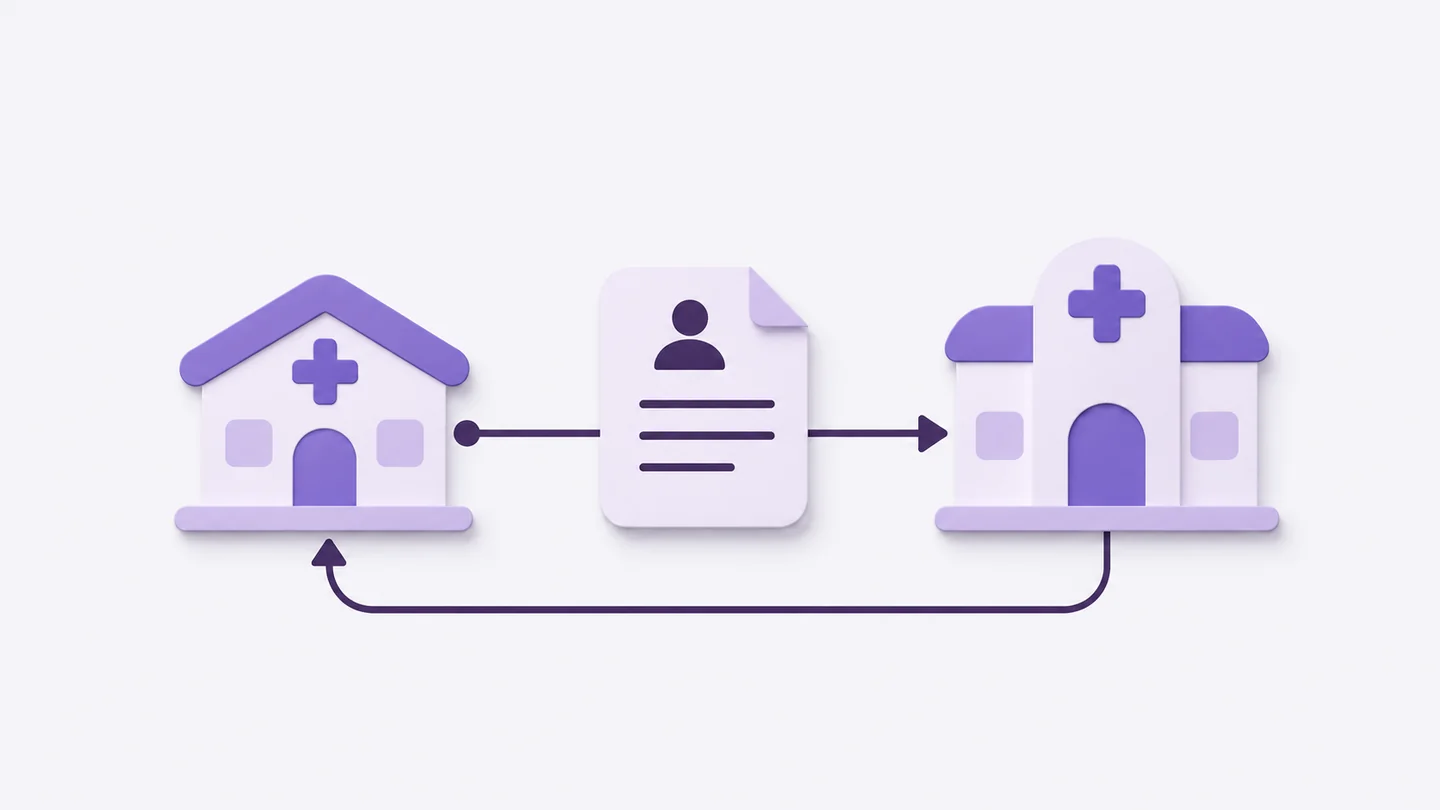
A referral can reach a specialty practice and still leave the patient without an appointment. Missing records, an unanswered call, or a callback with no owner can stop progress. AI can help with the outreach and routing, but the workflow needs a clear next step for each of those situations.
- ReceivedThe referring office sends the referral.
- ReadyIntake checks that the referral is ready for outreach.
- ReachedThe patient responds and shares a preference.
- BookedThe scheduler confirms the appointment.
- AttendedThe specialty practice records attendance.
- ReturnedThe referring office receives the consultation note.
Start by separating six events: referral received, ready for scheduling, patient reached, appointment booked, visit attended, and consultation information returned. A booked appointment is progress. It does not mean the referral loop is closed.
Find the step where referrals stall
Review one recent cohort of referrals before changing the outreach. Keep referrals received during the same period together, and give them the same amount of time to progress. Separate duplicates, referrals outside the practice's scope, and cases that need clinical review.
For each eligible referral, ask:
- Is the information required for scheduling complete?
- Who owns the next action, and when is it due?
- Has the patient actually responded, or has the system only delivered a message?
- If the visit happened, did the referring team receive the consultation information?
Research on cross-institutional referral workflows describes barriers in information transfer, coordination, and tracking across organizations. It supports examining the entire workflow; it does not establish that an AI calling product increases completed visits.
If most referrals are waiting for records, more patient calls will not solve that bottleneck. If complete referrals wait days for a first attempt, outreach is a more plausible place to start.
Give each referral a next action and an owner
Use a small set of operational states that staff can explain:
- Needs information: assign the missing item to a referral coordinator. Pause scheduling outreach until the referral is ready.
- Ready for outreach: check contact details, communication preferences, and the practice's approved contact policy before starting.
- Patient reached: record whether the patient wants to book, needs a callback, declines, or needs staff help.
- Booked: verify the appointment in the scheduling system. Stop the referral-booking sequence and use the appointment workflow.
- Needs staff review: route insurance questions, ambiguous requests, and clinical concerns to the appropriate team.
- Visit completed: track the consultation information separately until the referring team receives it.
“Attempted,” “message delivered,” and “patient reached” should have different meanings. A delivered text is not a conversation. An accepted scheduling request is not a confirmed appointment.
Set an explicit end to unanswered outreach. After the practice's approved attempt limit, create a review task with the attempt history rather than continuing indefinitely.
Work through one referral
Monday, 9:00 a.m.: a specialty practice receives a referral that lacks a required record. The coordinator gets a task identifying the missing item and a due time. The patient is not repeatedly asked to book an appointment the practice cannot yet offer.
Tuesday, 11:00 a.m.: the record arrives and staff marks the referral ready. Outreach begins through a permitted channel.
Practice: We have a referral for you. Would you like help arranging an appointment?
Patient: I can only talk after 4.
Practice: I can pass that to our scheduling team. Which day works best?
The workflow records the requested callback window, assigns a scheduler, and stops the generic contact sequence. A callback request should remain open until someone completes it or records why it could not be completed.
Tuesday, 4:15 p.m.: the scheduler offers an appointment. The workflow marks it booked only after the scheduling system confirms it. Any pending referral-booking calls are canceled.
After the visit: attendance and return of consultation information are separate events. If the appointment is canceled or missed, the practice decides whether to reopen scheduling or route the referral for review.
The message examples assume the practice has approved the channel, identity checks, and wording. Keep specialty, diagnosis, and other sensitive details out of messages unless the practice's communication policy permits them.
Measure the whole referral path
Choose a received-date cohort and a fixed follow-up window before counting. For example, compare referrals received in two four-week periods after each cohort has had 30 days to progress. Those periods are an evaluation design, not a clinical deadline.
Track:
- Scheduling readiness: eligible referrals ready for outreach ÷ all eligible referrals received. Also report how long incomplete referrals wait.
- Patient contact: referrals with a two-way patient response ÷ referrals ready for outreach. Report attempts separately.
- Booking: referrals with a verified appointment ÷ referrals ready for outreach.
- Attendance: attended visits ÷ booked visits whose appointment date has passed. Show cancellations, reschedules, and unknown outcomes separately.
- Information returned: completed consultations with information returned to the referring team ÷ completed consultations due for that step under the practice's policy.
- Unresolved work: open tasks by reason, owner, and age. Report both median and 90th-percentile time to the first outreach attempt.
A referral may not have reached every stage when the reporting window closes. Keep those cases pending; do not count an appointment scheduled for next month as a missed visit today.
For a simple arithmetic example, 40 verified bookings from 80 ready referrals is a 50% booking rate. It says nothing yet about attendance, clinical outcomes, or whether AI caused the bookings.
Where Tremi fits
Tremi coordinates calls, messages, and follow-up actions across connected tools. For a referral workflow, the useful design is to start outreach when the referral becomes ready, capture the patient's response, route an exception to staff, and stop pending booking outreach once the scheduling system confirms an appointment.
The systems connected to a practice determine what can be read or updated. Before enabling booking, verify access to live availability, appointment confirmation, cancellation events, and duplicate handling. When a direct connection is unavailable, use an explicit staff task instead of telling the patient an appointment has been booked.
Tremi for healthcare providers describes the healthcare workflows. Bring one referral path, its source system, and its exception list when evaluating fit. A focused workflow is easier to verify than a promise to automate every referral.
Run a bounded pilot
Start with one scheduling team and one referral type. Record a baseline, agree on the definition of each outcome, and review unsuccessful cases as well as successful ones. Keep appointment supply, referral mix, and the observation window comparable; these can change booking rates independently of outreach.
Expand only after staff can answer three questions: Is each referral assigned correctly? Does the workflow stop when the patient responds or books? Can staff see and resolve every exception?
Once a patient books, the next job is helping them attend or change the appointment. See the appointment reminder playbook for that next stage.