

Service businesses
Recovering missed calls for service businesses
Separate new inquiries from existing-job questions, assign the next action, and verify recovery through callbacks, bookings, and resolved requests.
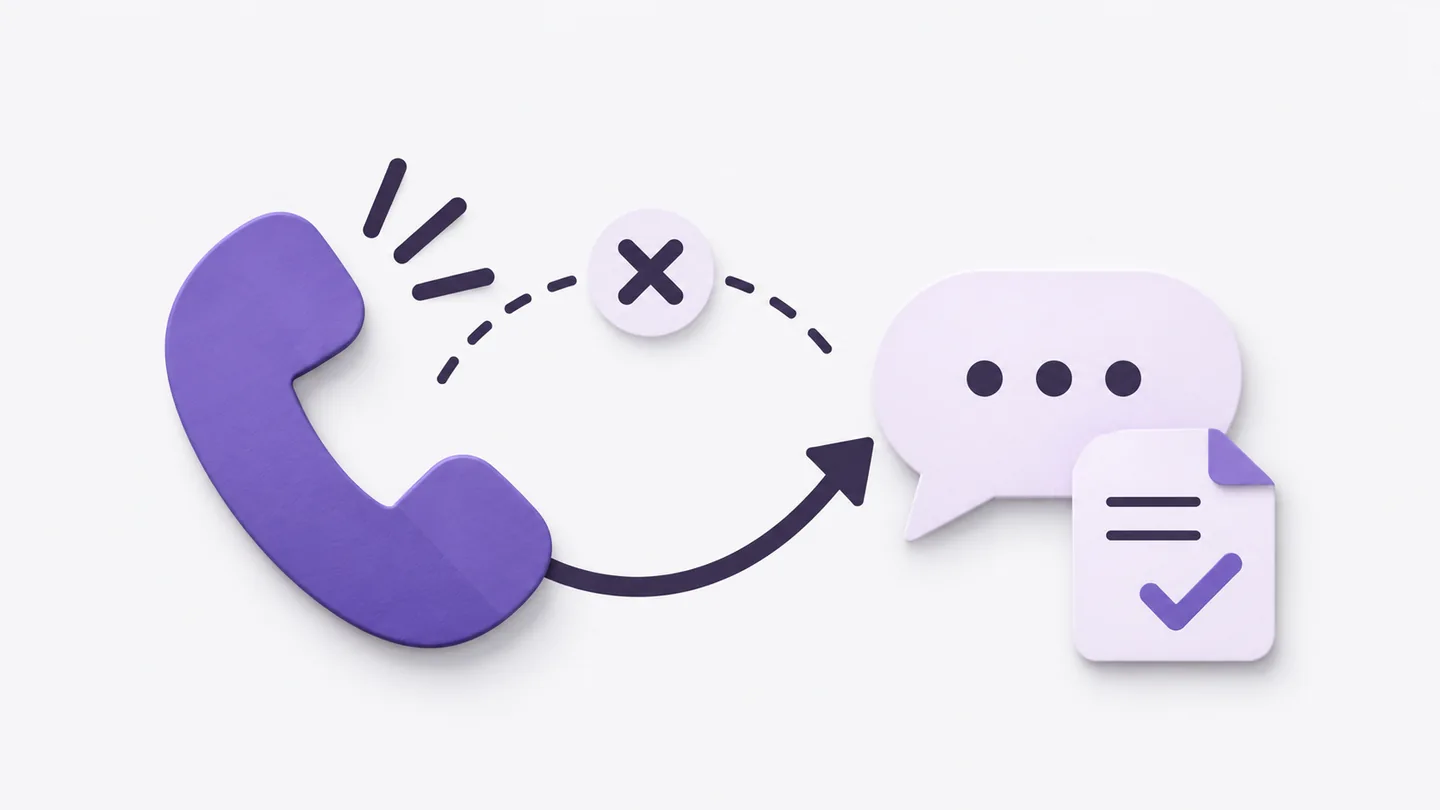
Recover a missed service-business call by identifying the request, checking whether it was handled elsewhere, and assigning a useful next action. A callback, a text, and an AI answer are different tools. None is a recovered job until the customer's request reaches a verified outcome.
The most common design mistake is treating every unanswered ring as a new sales lead. Some callers are existing customers, some are returning your call, and some need help with work already underway. The first follow-up should make that distinction easier.
Separate missed calls from unresolved requests
Start with a small audit of call records. Count unanswered calls by hour, but also group repeated calls that concern the same request. Five calls about one repair are five attempts to reach you, not five potential jobs.
Exclude known spam and internal calls from the prospect denominator. Keep existing-customer support requests visible in a separate group rather than dropping them from the operational picture. A missed call about an active job may deserve a faster response than a new quote inquiry.
For each unresolved request, capture the call time, business line, any available voicemail context, linked customer or job record, next owner, and due time. Treat caller ID as a lookup hint, not proof of identity or permission for an unrelated marketing sequence.
Choose a recovery path for the situation
Use a small set of routes your team can actually support:
- New service inquiry: collect the service needed, broad service area, and a preferred callback window. Staff confirm availability and fit.
- Existing appointment: identify the appointment and route a change request to scheduling. Do not promise a new time before it is confirmed.
- Problem with completed work: create a service issue with the job reference and an owner. Keep it out of the sales follow-up queue.
- Urgent safety concern: use the business's approved escalation instructions. Do not let a sales assistant diagnose hazards or promise emergency coverage the business does not provide.
- Unclear or wrong-number call: ask a limited clarification where appropriate, then close or correct the record.
These routes can share an intake process while producing different tasks. “Someone will call you” is not a complete handoff unless a specific team is responsible and the response window is realistic.
Distinguish answering a call from following up afterward
An inbound assistant requires working phone routing: the number, forwarding or overflow behavior, agent, hours, and fallback all need to be configured. An outbound callback workflow does not automatically answer the business's existing number.
Test the route you intend to use. Call during open hours, after hours, and while the main line is busy. Confirm what happens if forwarding fails or the agent cannot complete the request. Keep a fallback appropriate to the business, such as voicemail or a staffed line.
If you use a follow-up text, verify that the communication is permitted. Twilio's messaging policy describes consent and opt-out requirements; a missed voice call alone should not be treated as evidence of SMS consent.
Walk through one missed call
Consider a fictional plumbing office. Taylor calls at 17:40 about an invoice question after a completed repair. The office misses the call, but the voicemail includes the job reference.
The wrong recovery is a sales message offering a new estimate. The useful recovery is to link the request to the existing job, assign it to billing, and acknowledge the callback request through an appropriate channel.
An example response, if text contact is permitted, could be:
Hi Taylor, this is Cedar Plumbing. We received your invoice question and have sent it to our office team for a callback tomorrow. Is there a preferred time? Reply STOP to unsubscribe.
Send that promise only if tomorrow's callback is within the team's actual capacity. If the office cannot commit to a day, use an accurate response expectation instead.
Now consider a new caller asking for a repair visit. The intake can collect the problem and a callback preference, but it should not turn “Tuesday would work” into a confirmed Tuesday appointment unless the scheduling system accepts the booking.
Prevent duplicate recovery attempts
The caller may submit a form while the callback is waiting. A receptionist may also reach them manually. Decide which event closes the missed-call recovery and how that event reaches the workflow.
Match on the request or job when possible. A customer can have an invoice question and a new service inquiry at the same time. Closing every active task on the phone number risks losing one of them.
Before another attempt, check the current request state and any contact restrictions. If the customer has replied with a question, route that conversation instead of sending another “sorry we missed you.” The stopping-rules guide gives a practical review checklist.
Measure resolution, speed, and backlog
Track unique eligible requests, time to the first useful response, completed callbacks, verified bookings, resolved support issues, and outstanding work. Report response speed with both a median and a slower-tail measure, such as the 90th percentile, so a handful of very late callbacks remains visible.
Define the clock. An after-hours caller may receive an acknowledgment immediately and a staff callback the next morning. Measure both elapsed time and staffed-hours response time if they answer different operating questions.
If 15 of 60 eligible new-service requests become confirmed appointments, the observed booking rate is 25%. It does not mean 25% of all missed rings became jobs, and it does not establish incremental revenue. Keep cancellations, completed work, and payment separate. These are illustrative numbers, not measured Tremi performance.
Start with one line and one owner
Tremi can support configured call intake and follow-up workflows. Verify inbound routing, the data available from your call source, and the exact connected-app action before expanding. Begin with a line your team understands and synthetic requests routed to destinations you control.
Test a new inquiry, an existing-job question, a duplicate request, an opt-out, and a failed staff handoff. Review the task where staff will actually work, not just the conversation transcript.
Explore service-business workflows and lead follow-up across channels once you can reliably turn a missed call into an owned next step.